Sample Focus Built Its Catalog Without Venture Capital
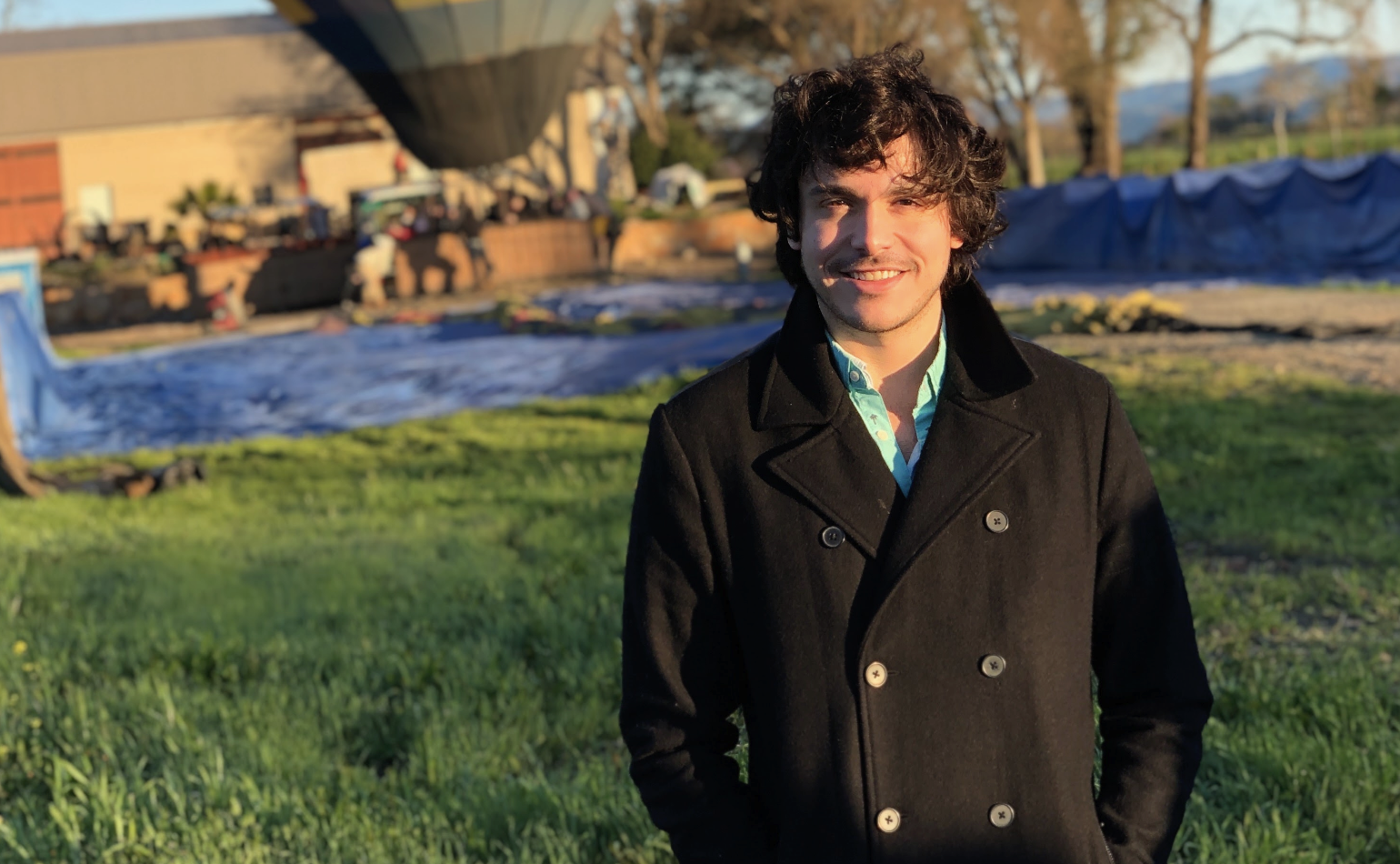
Sample Focus began with a problem that can derail an entire production idea: founder Daniel Trostli was regularly spending 45 minutes searching poorly organized folders for one sound. He wanted a catalog that could narrow thousands of options into a manageable set within seconds while preserving the immediacy producers need when an idea is still developing.
Trostli built the platform around a give-to-get credit system, allowing members to earn downloads by contributing sounds of their own.
Every submission passes human moderation before publication, giving Sample Focus a way to expand its royalty-free catalog while checking audio quality and metadata.
That model also creates a demanding business equation.
Free members provide much of the new material, subscribers fund the service, and moderators protect the catalog from low-effort uploads encouraged by the same credit system that keeps it growing.
Ahead of WMC 2027, we spoke with Trostli about bootstrapping Sample Focus, organizing subjective sound descriptions, using AI to improve search, and funding an open library without losing its original purpose.
Be a part of conversations like this by purchasing your badge for 2027 here.
Interview With Daniel Trostli

You launched Sample Focus after finding that large folders and poorly organized libraries were interrupting your writing process. How did that personal problem become a viable platform concept?
It all started when I was consistently losing my state of flow while spending 45 minutes looking for the right sound. To me, it was as if I had a massive collection of books, but they were haphazardly thrown onto a giant heap on the floor.
What I wanted and needed was an organized and beautiful catalog that would let me find the sound that was in my head within a few seconds.
This was the problem that birthed Sample Focus. Initially, like anyone faced with a cluttered room, my instinct was to clean and organize my sorry excuse for a sample collection. Instead, I drew inspiration from sites like YouTube and Wikipedia, where I was impressed by the community organization and contributions to a collective library.
I also drew inspiration from the origin story of the common internet CAPTCHA. This utility, which was designed to prevent automated bots from accessing websites, helped me see that internet users would perform small bits of work on behalf of an internet service to receive a reward. In the case of reCAPTCHA, users were shown two words, one that was already known to the system and one that was not. This was, of course, before computers could reliably read written characters. The trick was that the user proved they were human by transcribing one word while also doing a bit of micro-work to transcribe other text, all with the promise of receiving access to whatever was gated behind the CAPTCHA challenge.
So, in order to bootstrap this sound library I envisioned, I came up with the first give-to-get model used for sample libraries. This became the earned download credit system, which remains in place today and allows users to upload sounds to earn credits.
This, along with the organizational taxonomy, was a key innovation in starting the flywheel that became Sample Focus.
Once this concept of a credit system was in place, there was room to make it a viable business by also allowing users who prefer not to upload sounds to earn credits to purchase a subscription.

Sample Focus has remained bootstrapped without venture-capital funding. How has that affected the speed and direction of product development?
On one hand, bootstrapping materially constrains the speed of product development, as well as the growth of the library and user base. On the other hand, bootstrapping has allowed me to think carefully and deliberately about the direction I want to take the product instead of chasing short-term wins that are typical of companies trying to satisfy investor expectations.
Bootstrapping also led me to prioritize practicality in my product and engineering decisions. For example, I picked a web framework with good defaults that mostly worked out of the box, which, in our case, was Ruby on Rails. We also focused purely on developing for one platform, desktop web, instead of pursuing multiple environments.
Before working full-time on Sample Focus, I worked as a professional software engineer in small and large companies and saw firsthand how silly decisions were made that had no real impact on the most important stakeholder: the end user.
This made it easy for me to stay in touch with what matters to music producers and make product decisions quickly and decisively. The natural progression of all venture-backed businesses I have seen is that the engineers and product managers get further and further removed from the actual usage of their product. It seems like a natural evolution as companies get bigger.
Hence the advantage of staying small!
In what ways do you account for subjective descriptions such as mood or character when contributors may interpret the same sound differently?
This is an excellent question and something we still struggle with. We rely on a dictionary of synonyms for search purposes, but even that is incomplete. This is an area where we can certainly invest more resources in the future.
To try to alleviate this issue, when I originally designed the organizational system for the samples, I came up with two different kinds of classification: categories and tags.
Categories are meant to be mutually exclusive and objective. For instance, a single-source sound cannot be a guitar and a saxophone. It is one or the other. However, in the case of tags, a sound can very much be described as a pop and rock sound. Similarly, for other subjective qualities such as a sound’s emotional character, a sound could be somber and haunting for one user, then sad and melancholic for another.
In the future, I think finding the meaning of what a user really wants when they say it in a multitude of different ways is an area where large language model technology could really shine.
Sample Focus only exists because producers are willing to share their own sounds with a free, royalty-free library. What actually motivates them to contribute, and what is the hardest part of keeping that flow of new sounds healthy?
The primary motivation is to access additional sounds. Currently, uploaders receive four credits for each sound they upload that our moderators approve and publish. Our moderators look for high-quality sounds that are properly tagged and organized, and they confirm that the uploader has the rights to share them.
However, I do believe that our users are also motivated to be part of our community! There are not too many authentic and close-knit communities focused on music production.
We created a comprehensive analytics view so users can see how many downloads, plays, and comments their samples inspire.
Maintaining a high-quality sound library is challenging, though. The hardest part of keeping it healthy is balancing our upload incentives with quality. The credits do a decent job of that, but they can also motivate low-effort uploads or attempts to game the system. Our moderators and constructive feedback system for uploaders help protect the library without discouraging contributors too much.
Any open, community-driven library risks turning into a dumping ground as more people upload. How do you keep Sample Focus curated and genuinely useful, rather than just big?
That risk has been on my mind since day one. That is why, unlike other user-generated content platforms, there is an intermediate moderation step between when a user uploads a new sound and when it is published.
The first thing our moderators evaluate is whether the uploaded sound meets the quality standards we expect of our library. If it is a high-quality sound, they then evaluate the accuracy and usefulness of its metadata, including whether the name and tags properly describe it. This human-in-the-loop system does a pretty good job of keeping our library beautifully curated.
If, for some reason, the upload does not match what we expect, we have a system in place to politely ask the user to return and fix any issues so that we do not discourage our contributors.
Sample Focus keeps its whole library free to use, with royalty-free downloads rather than sounds locked behind a paywall. At your scale, what is the toughest part of making a freemium model like that sustainable?
There is a fine balance between managing the expectations of free users and cultivating the uploads that keep the system alive versus the realities of running a popular internet service. There is, of course, a tension between what is best for free users and what is best for the business. I believe that, like many internet services, the vast majority of value Sample Focus creates goes back to the users. In MBA speak, you might say we create high consumer surplus and have low value capture.
Typically, a free user is not the same kind of user as a paying one, and that is an important distinction to make as we develop the product for two kinds of users. Some users are willing to contribute their sounds and time, while others who need speed and convenience are willing to pay. Both groups contribute differently to keeping the ecosystem alive.
Without the free users, we would not be able to consistently provide high-quality new sounds to our community, and without our subscribers, we would not be able to run a service that has real costs associated with it.