Caspar Bock Soerensen Breaks Down Baby Audio’s Product Decisions


Caspar Bock Soerensen founded Baby Audio in New York in 2019 with an emphasis on simple, approachable software built around original concepts. The independently owned company later operated from Denmark before moving to California in 2023, and it acquired Denise Audio that same year.
Since its launch, Baby Audio has earned honors from Sound On Sound, Magnetic Magazine, Future Music, Computer Music, and other industry publications. Its catalog has grown alongside a plug-in market shaped by aggressive discounts, rising customer expectations, and mounting competition.
Ahead of WMC 2027, we spoke with Soerensen about the early decisions behind Baby Audio, revisiting older products, pricing perpetual licenses, and how AI-assisted development could affect the next generation of audio software companies.
Want to be apart of conversations like this? Buy your badge today for Winter Music Conference 2027.
Interview With Caspar Bock

Baby Audio launched in 2019 and established a recognizable identity within a crowded plug-in market. Which early decisions had the greatest effect on that growth?
First, our timing was fortunate in hindsight as it was before the market became too saturated and right before the whole world got locked up at home.
Luck always plays a bigger role than people give it credit for — and I was lucky. Also with the people I met and collaborated with when I started the company, who turned out to be very talented and loyal. But other than that, I think our focus on simplicity, fun, and user friendliness was a fresh variation from the incumbents’ focus on hardware emulations.
I wanted to do something fresh and new. At the time, this perspective was rarer than it is today.
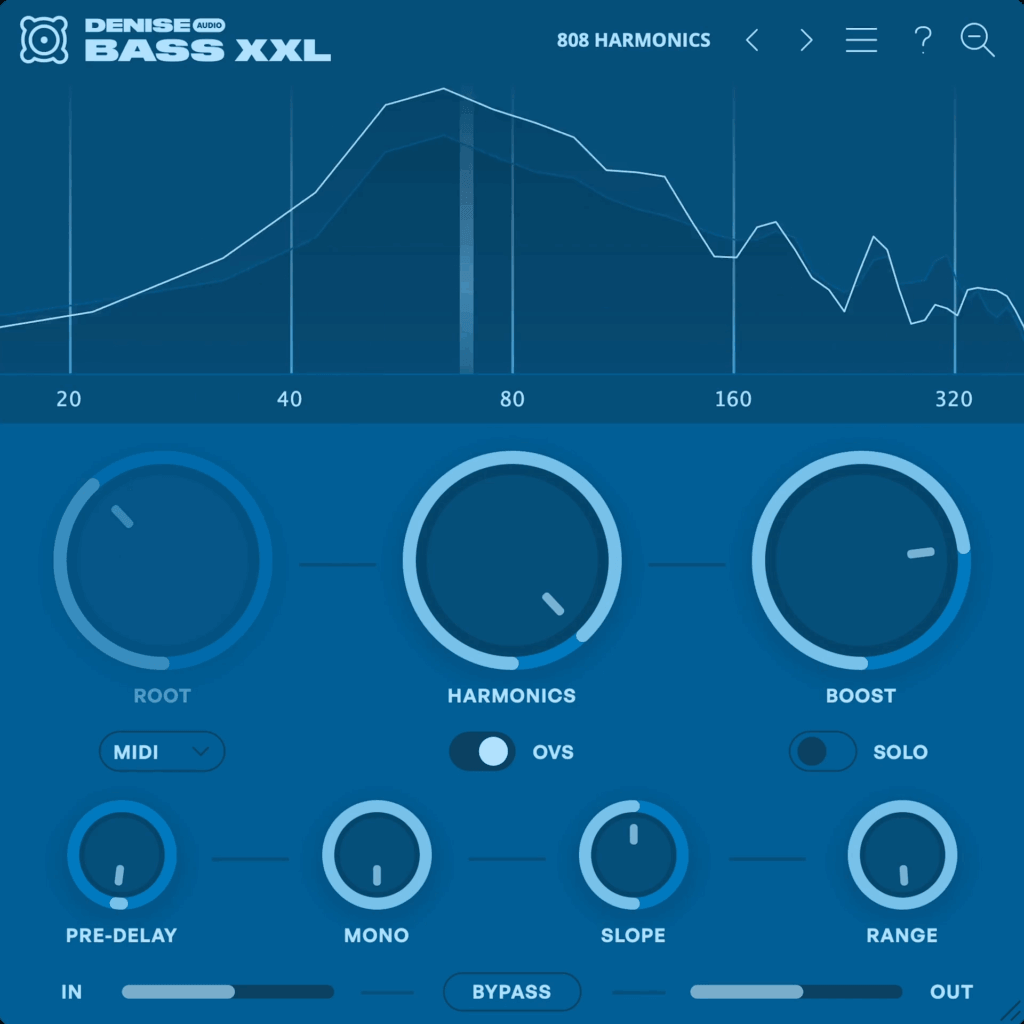
SubCulture develops technology first explored in Denise Audio’s Bass XXL. How do you decide when research from one product deserves a new application elsewhere in the catalog?
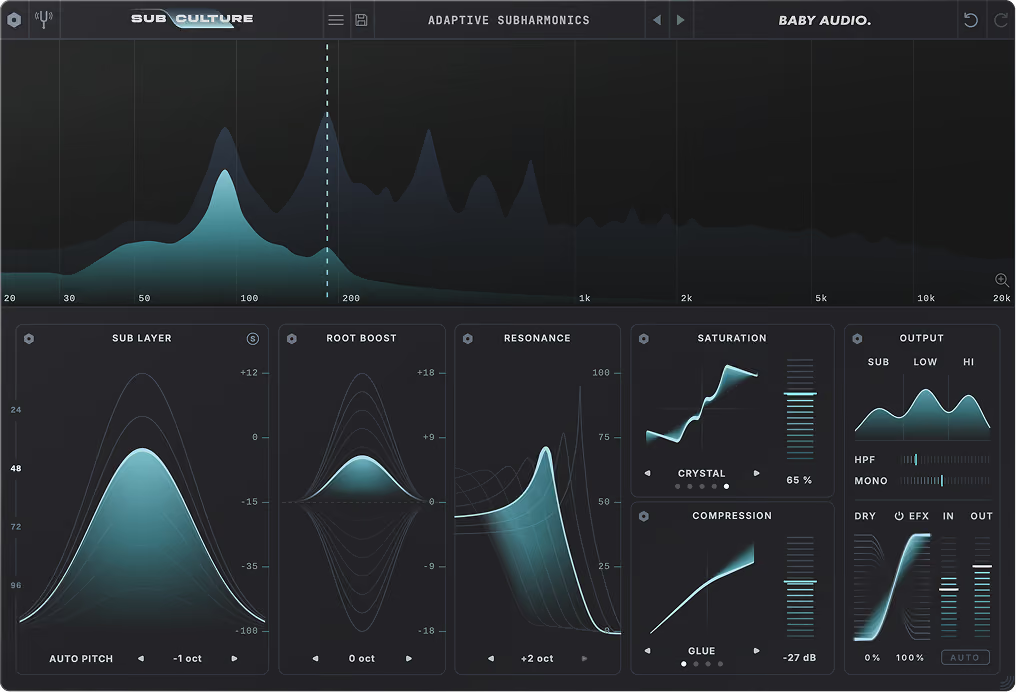
SubCulture builds on the concept and user feedback from Bass XXL but not on any source code, it was rewritten from scratch.
As for the general question: The good thing about having released many products is that improvements and breakthroughs from one product can form part of the codebase that is used for the next. Having said that, we never just re-purpose our existing code library to create a new product.
We try to always have something entirely new done that justifies the release. So each release becomes a new contribution to our code library in that sense, ensuring the next release after that has a better starting point.
How do you decide whether an older plug-in should be rebuilt, expanded, preserved, or discontinued?
I wouldn’t say there’s a clear process to this other than the general sense that if we can replace our “worst” product with an upgraded version that becomes one of our “best” products, then we’re constantly making the BA package as a whole better.
This means there are currently some obvious candidates for V2 versions among our earliest plugins, all of which are in the works.
Deep discounts have become common across the plug-in business. Has constant discounting changed how customers understand regular pricing?
Probably, yes.
It’s a bit of a curse on the industry that discounting is so constant and aggressive. We’re not above this either and also run campaigns often as it’s the only way to sustain the business. Software is a zero marginal cost product and it’s a logical consequence that in a competitive market, prices race to the bottom when there are no cost of goods sold. I wish it wasn’t so but one small comfort I do find in it is that music-creators nowadays have so many amazing choices at such a small cost.
Try comparing it to the hardware days and it’s clear just how much more affordable it’s become to produce professional music. I think that’s fundamentally a good thing.
As for our own sales strategies, we try to at least be predictable with fixed price points for both our MSRPs and sales campaigns — and a somewhat fixed logic to when campaigns are run (e.g. intro sales and Black Friday).
As operating systems and plug-in formats continue to change, how should developers account for long-term compatibility when pricing software?
That’s an interesting question and I don’t think that plays much of a role in how software is priced even if it should. Users probably expect a perpetual license to mean forever but it is true that this might require updates from the developer and that developers who neglect updates – or charge for them – are probably breaking the expectations of their users.
If you ask for us specifically, we take the term perpetual very seriously and absolutely expect to support future compatibility demands with free updates.
Therefore, this question doesn’t really affect our pricing decisions.
Over the next five years, which assumption about how music software is developed, sold, or owned do you expect the industry to reconsider?
Well, one massive change that I’d like to talk about is that there’s a huge inflow of vibecoded / AI-created products by independent developers as well as non-developers.
There’s no reason to assume this won’t continue or ramp up further. But ironically, the reduced structural barriers to entry end up making the practical barriers to entry nearly impossible because how can you build a new business with products anyone can vibecode in a space that’s already oversaturated? So you have this interesting situation where zero barriers to entry make it almost not worth entering at all.
Where does that leave the established companies such as ours?
I think we have only one choice: To make products of a quality, scale, ambition, and vision, that vibecoding can’t compete with. Today, this is a pretty comfortable challenge to overcome. As AI gets better (provided it does, but that’s a separate discussion), this may or may not get harder. But I believe the best companies and developers will always be at least one step ahead. AI can only create products based on something that was already done before and that the AI was trained on. So for Baby Audio, we focus on creating things that have not been done before.
I believe there’ll always be a market for that.
And I believe that the harder it gets to run a plugin company, the more it will become a “winner-takes-all” market for the companies that make the best products. I’m so excited for this. We’re prepared. It’s a wonderful challenge.