Inside IK Multimedia’s History Ahead of Winter Music Conference 2026

Images Courtesy Of IK Multimedia
IK Multimedia is part of the fabric of Winter Music Conference 2026, with a history that closely tracks the rise of computer-based music production. Founded in Modena, Italy, in 1996 by Enrico Iori and Davide Barbi, the company began at a time when software audio tools were still taking shape.
Over the next three decades, it expanded from early loop software into mastering processors, virtual instruments, full-chain guitar modeling, mobile interfaces, monitors, room-correction tools, and a wider line of recording hardware.
That track record gives IK a meaningful place in 2026’s programming centered on production, community, and direct contact between industry pros and working artists. For readers looking to go further, The Producer’s Guide to Small-Space Studios extends that conversation with IK Multimedia through a focused look at room design, setup choices, and practical studio planning.
Before The Modern Plug-In Market

One of the most useful ways to understand IK Multimedia is to start with the period before the current plug-in economy had fully taken shape. In its earliest phase, the company was already experimenting with music software within a broader multimedia context, and the driving idea was simple: if the computer could handle musical tasks in a way that felt immediate, it could enable new production methods for a far larger group of musicians.
Early work around loops, recombination, and recorded percussion led to GrooveMaker, which established a pattern that would hold through much of the company’s later history. IK was looking for ways to reduce the distance between an idea and a workable result on screen.
That early outlook says a lot about the company’s later direction. It did not begin by chasing one narrow category. It began by asking what musicians were missing, what computers had started to handle well, and how those two points could meet in a usable product.
That was an important stance in the late 1990s, because digital production still carried a technical barrier that kept many musicians tied to traditional studio infrastructure. IK’s early products were part of the push to lower that barrier.
T-RackS And The Move Into Mastering
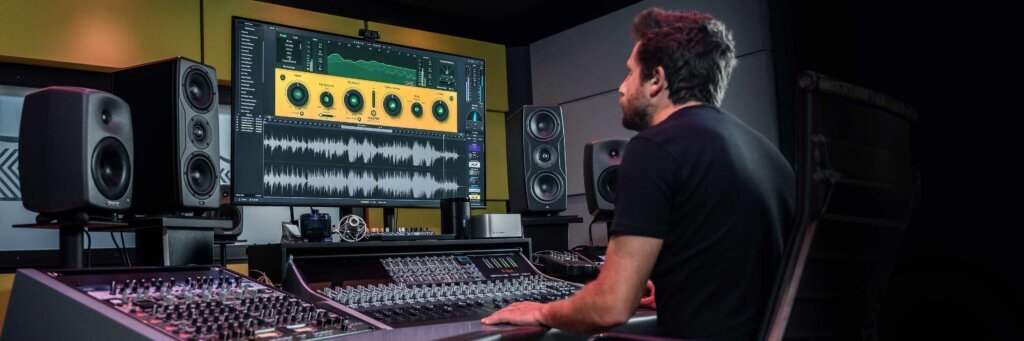
The next major step came with T-RackS in 1999. IK identifies it as the first analog-modeled desktop mastering solution, and that release placed the company early in a field that would later become central to home studios and project rooms. The premise behind it was obvious. If a mastering chain relied on EQ, compression, and limiting, and if computer processors had become powerful enough to run those stages in real time, then a musician no longer needed to view final polish as something reserved for large facilities.
This was by no means a small shift. T-RackS arrived during a period when many producers were still learning how far they could trust software for serious audio work. By turning mastering into a screen-based process that users could access from a personal studio, IK helped reinforce a broader move in music production.
The computer was no longer a side tool for editing and arrangement. It was becoming the room where the record could be finished.
SampleTank In-The-Box Composition Could Be
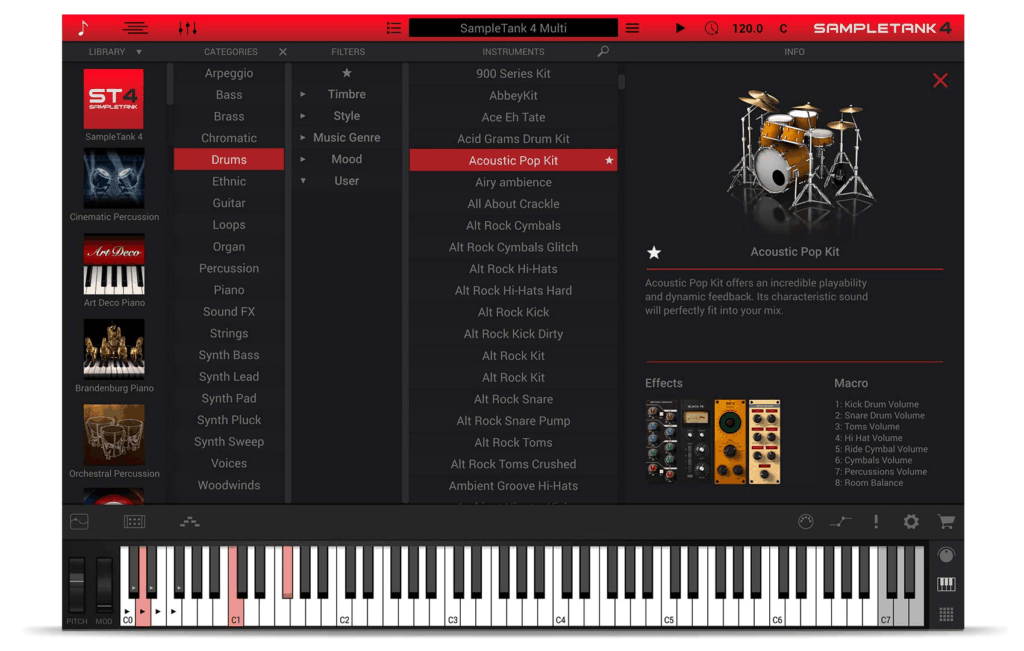
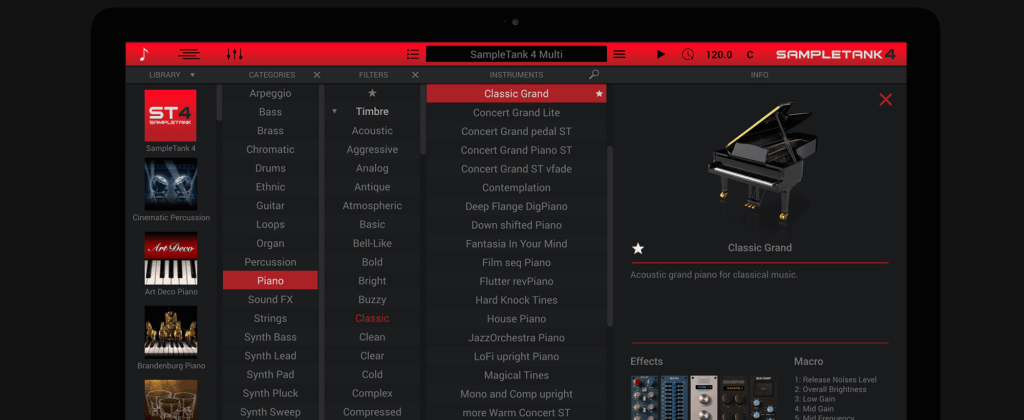
If T-RackS addressed finishing, SampleTank addressed writing. Released in 2001, it gave musicians a broad software instrument with drums, bass, keyboards, guitars, strings, and other foundation sounds in one place. That was a major moment for in-the-box composition. Instead of relying on an external module or a hardware stack, users could sketch and build tracks directly on the computer itself, with a much wider palette than many earlier software setups offered.
SampleTank also marked a business turning point.
Its success in the United States helped support the opening of IK Multimedia’s U.S. operation, which gave the company a larger commercial footprint and a stronger local presence in a key market. From that point forward, IK was no longer simply an Italian software developer with international reach. It had become a more fully structured music technology company with direct ties to multiple regions.
AmpliTube treated guitar production as a full chain
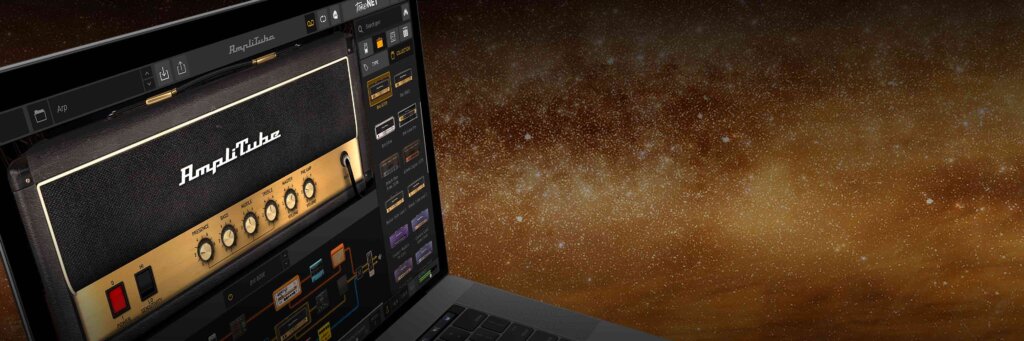
AmpliTube, released in 2002, advanced another major idea.
Instead of treating amp simulation as a narrow effect, IK approached guitar software as a complete signal path. Pedals, amplifier, cabinet, microphones, and downstream processing were all part of the concept.
That gave musicians a richer environment for recording and sound design, and it moved software guitar production closer to how players actually think about their rigs.
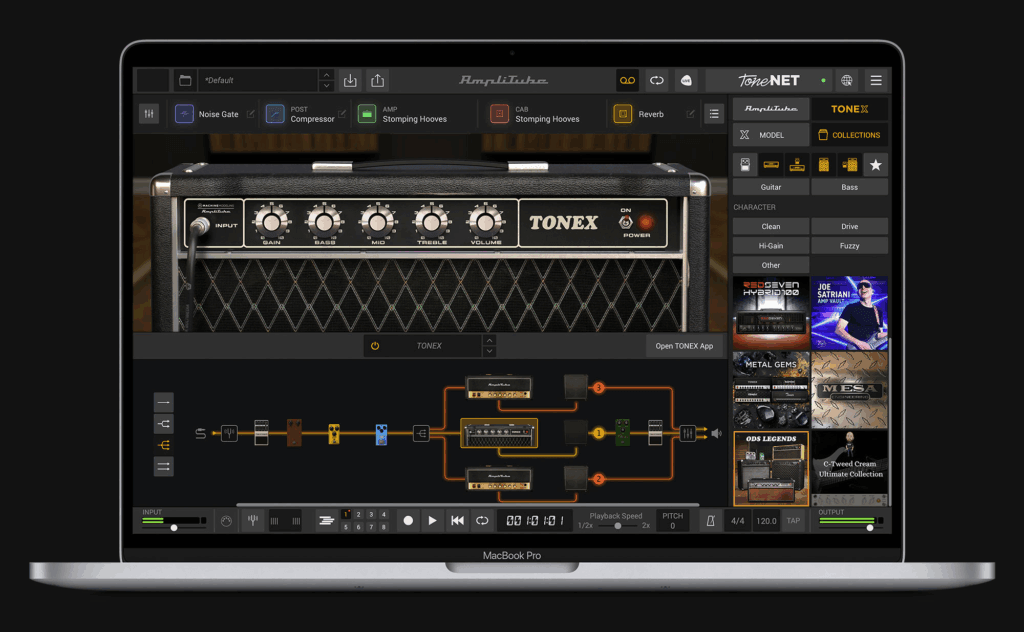
That decision helped establish IK as a serious player in guitar technology, though its importance extends beyond that. AmpliTube showed that the company’s earlier work in analog modeling could be expanded to meet diverse production needs and musician groups.
It also reinforced a recurring trait in the catalog: IK tended to look at the entire working chain rather than isolating a single small fragment.
The iRig Era At Scale
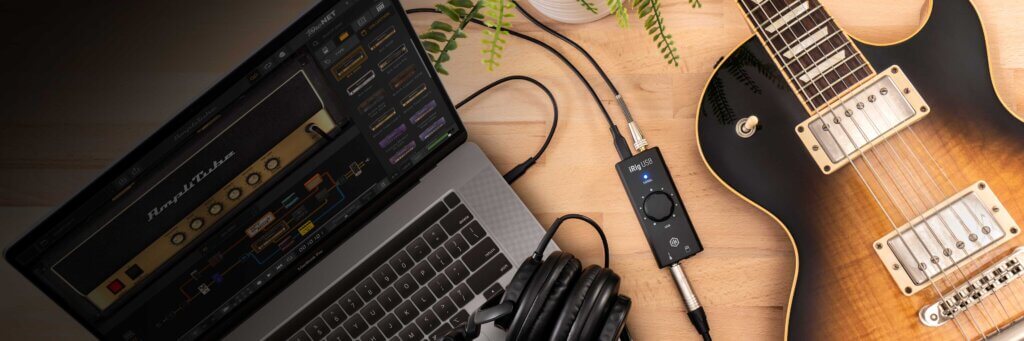
The mobile turn began in 2010 with iRig, and it changed the company’s profile in a major way. The original product gave guitar and bass players a direct path into iPhone and iPad, paired with AmpliTube on iOS. That opened recording, practice, and sketching to a format that had barely existed as a serious music platform a short time earlier.
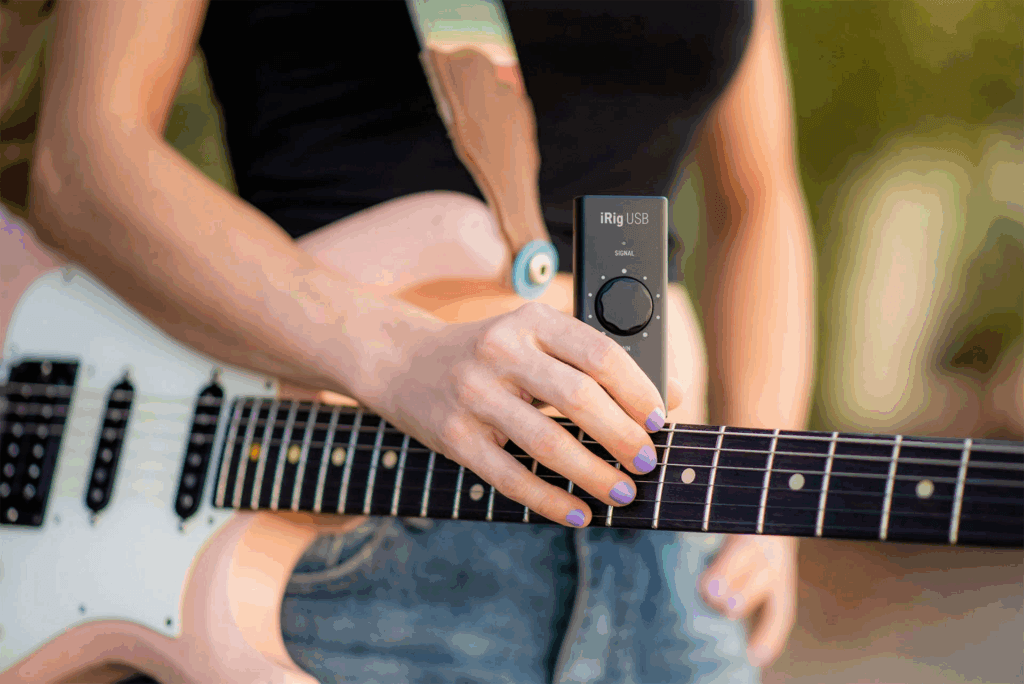
By 2020, IK said the iRig line had sold 5 million units, but the significance of that period goes beyond sales. iRig helped define mobile music-making as a workable part of a musician’s routine. It also pushed IK further into hardware, which later expanded to controllers, microphones, monitors, interfaces, and a broader range of portable tools.
The company had started in software, though by the 2010s it was operating across a much larger section of the production chain.
Why It All Matters At WMC 2026
All of that leads cleanly into Winter Music Conference 2026.
WMC’s Gear Exhibition Room is structured as a hands-on area for DJs, producers, and creators to test tools, watch demonstrations, and meet the teams behind the products. IK Multimedia is part of that exhibitor group for 2026, and its company history gives real context to that presence.
That point lands especially well in Miami, where producers and DJs spend conference week moving between hotel rooms, temporary workstations, live events, and fast-turn creative sessions.
IK has spent years building for that type of working life.
Its history covers the desktop studio, the project room, the mobile rig, and the compact setup used on the road. In a conference environment where portability, workflow, and direct access to gear are part of the daily rhythm, IK Multimedia arrives with a catalog and a company story that speak directly to how many artists now operate.