What CDJ-3000X And RMX-IGNITE Say About Where DJing Is Going In 2026
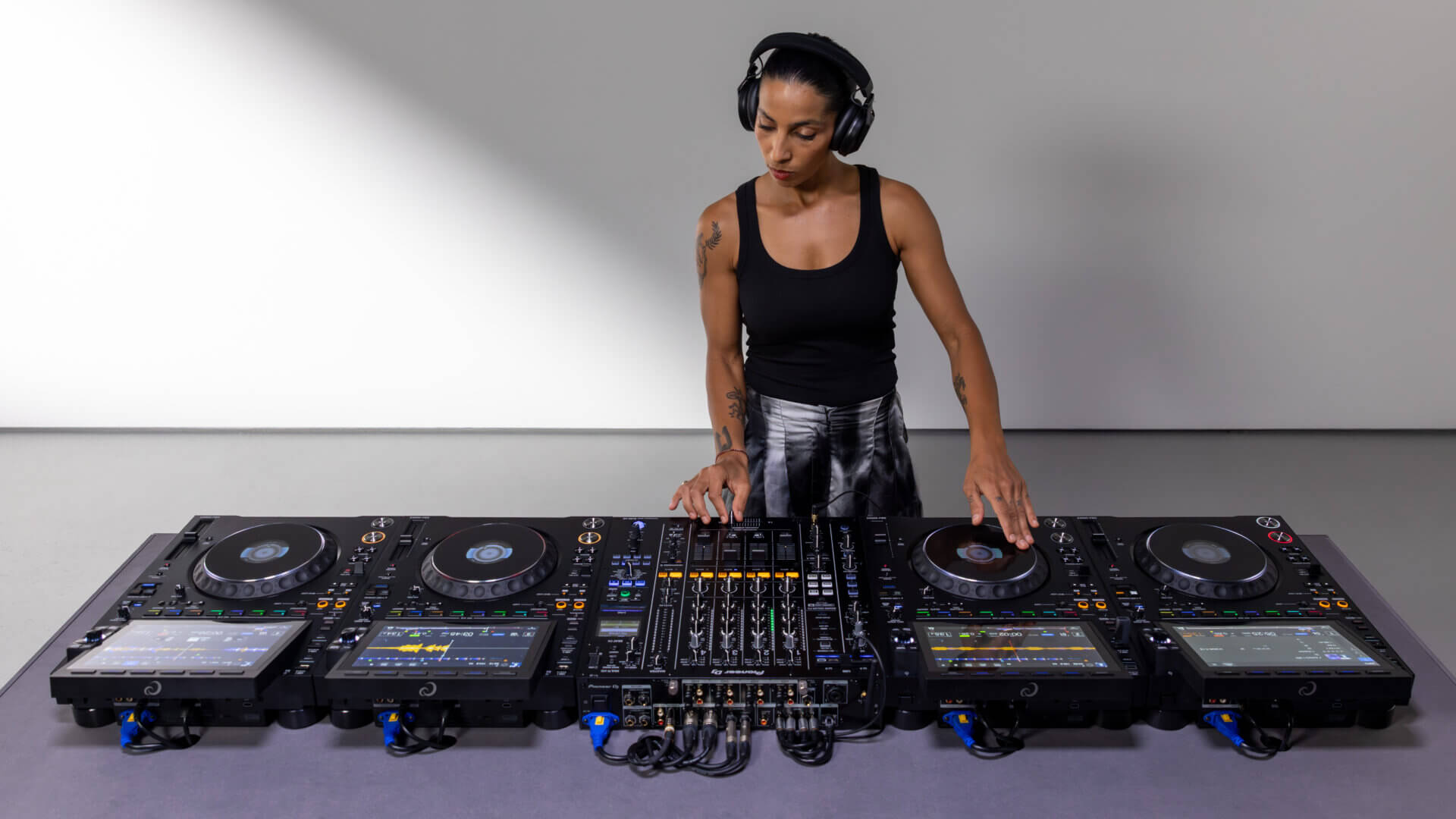
DJ technology coverage still spends a lot of time on visible changes, such as larger displays, new effects, fresh gear lines, and spec sheets designed to signal progress quickly. That coverage has its place, though it often skips the part of the job that shapes a set long before the crowd hears a transition.
The next phase of DJing turns on a question that still does not get enough attention. Can a DJ walk into an unfamiliar booth, load a prepared library in seconds, and trust the rig to respond with the same timing and control habits they practiced at home?
That question carries more weight now because the work around a set has evolved over the last decade. A working setup may pass through a club install, a festival changeover, a back-to-back slot, or a hybrid rig with multiple source paths, and the prep behind that setup rarely lives on a single device.
Tracks get tagged on a laptop, checked on a phone, backed up to cloud-linked systems, and exported to removable media long before the player is in front of the DJ.
The companies pushing DJ hardware forward in 2026 will win on that axis. The gear no longer ends at audio output or display size. It also includes how well a player restores the DJ’s library, cue structure, and workflow from prep to booth to close.
Seen through that lens, AlphaTheta’s recent direction looks like a response to a larger shift in how DJs prepare, perform, and move across shared systems.
The Booth Moved On While The Coverage Didn’t
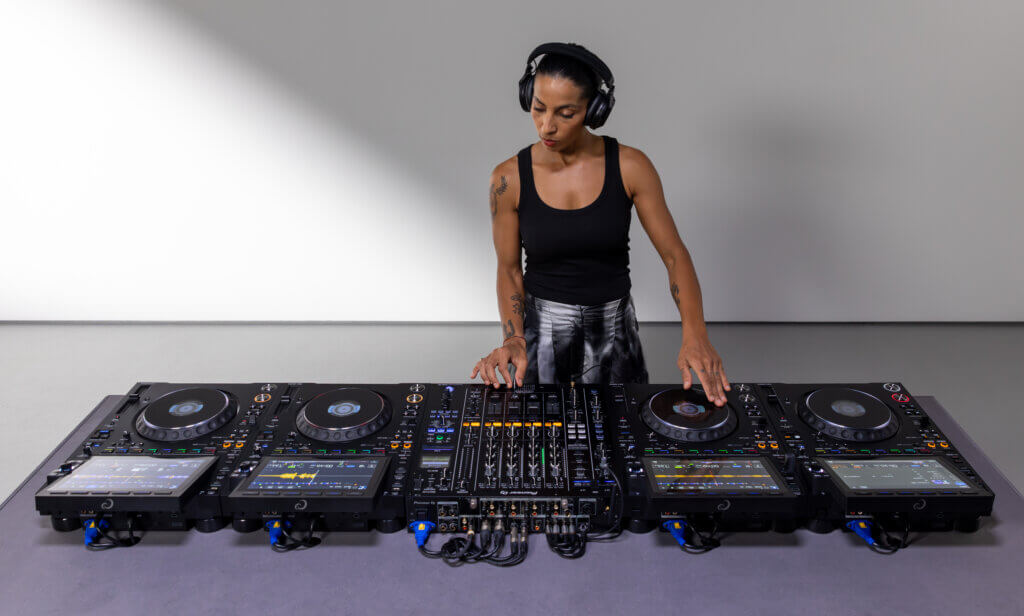
A lot of the language around DJ gear still comes from an older booth model. The familiar image is simple: a DJ arrives with media, plugs in, plays, and leaves. That still happens, though it no longer describes much of the real working field. Today’s booth is often shared, installed, networked, rushed, and shaped by venue operations as much as artist preference.
Festival changeovers can compress setup into a few minutes.
Clubs rotate multiple artists across the same rig in one night instead of handing one person the room from open to close. Some DJs prepare in rekordbox on a laptop, confirm details on a phone, and carry removable media as backup. Others bring an added performance layer for one part of the set. House rigs get used by multiple artists across the week, which means search speed, timing stability, and predictability are no longer personal preferences alone. They are operating concerns.
That evolution raises the standard for what counts as a useful step forward in booth design. Audio quality still matters, and interface response does too. Those measures now sit inside a wider demand. The rig needs to restore a DJ’s prep quickly, stay stable under pressure, and cut down the amount of recovery work that happens once the set starts. When that recovery begins in public, the effects show up quickly. Search slows down. Cue confidence drops. Track choice narrows. The crowd may not know why the set feels less sharp, though they can hear it.
That is where gear coverage often falls short.
Too much of it still treats DJ equipment like isolated consumer hardware. A stronger frame treats the booth as a managed environment, where hardware choices affect changeover speed, troubleshooting load, and the artist’s ability to stay focused on the room rather than the machine.
Your Library Has To Travel Like You Do
Portable identity is a useful way to describe what DJs need from a modern rig. The phrase can sound abstract until it is tied to real booth behavior. Portable identity means a prepared library state that moves with the artist. It includes cues, grids, playlists, tags, sorting logic, naming systems, and the habits a DJ builds around them through repetition. In performance terms, that preparation shapes track selection, transition timing, backup choices, and the pace of decision-making under pressure.
Lose that structure during a fast changeover and the damage shows up immediately. The next record takes longer to find. A trusted cue point turns into a guess.
Playlist flow disappears.
The set starts to feel like recovery instead of direction. That is why portable identity now sits near the center of the category. It protects the preparation from booth friction.
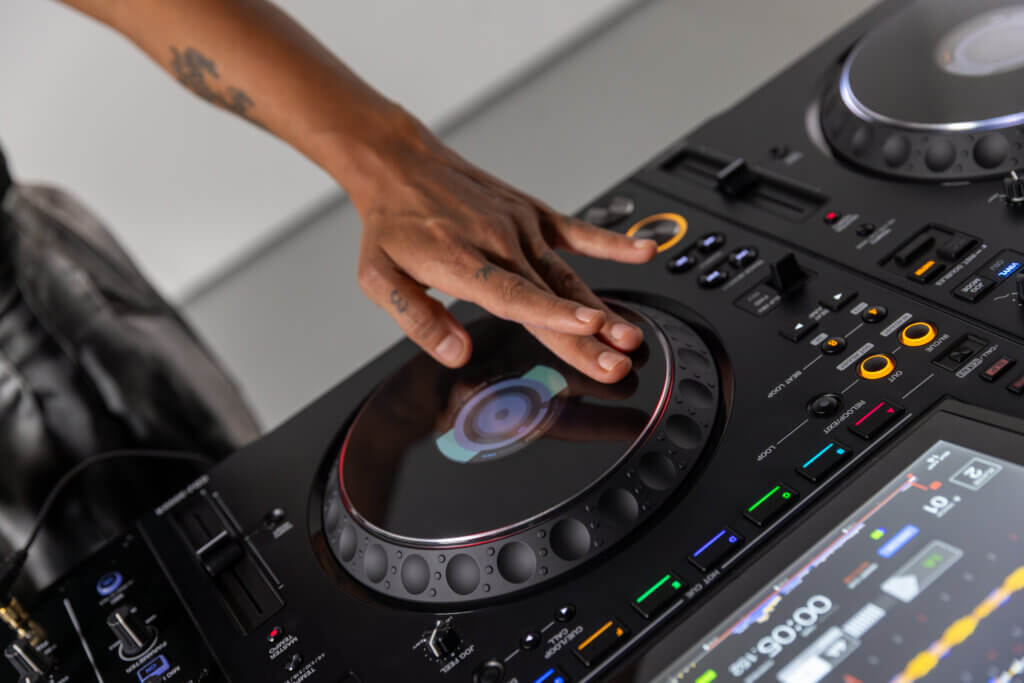
The CDJ-3000X leans into that direction by treating the phone as a real access point and by supporting cloud-linked library paths through rekordbox. That move lines up with how many DJs already live with their collections. Library work happens in transit, backstage, at home, in green rooms, during travel days, and in the small pockets of time when a set starts to take shape before the date arrives. The player enters that process late. Its job is to restore it cleanly and fast.
That has direct value for working DJs, venues, and touring crews.
Portable identity gives venues a smoother handoff between artists. It gives DJs faster access to their own prep. It lowers the chance that a set begins with hunting, rebuilding, or double-checking things that should already be settled.
Continuity Wins Sets
Continuity can sound broad until it is reduced to booth behavior.
It means the right track appears quickly. Its prep state is visible at a glance. Small edits can happen without pulling attention away from the active deck. Control responses feel familiar enough that practiced timing still holds under live conditions.
That deserves to be treated as a performance feature because continuity protects mental bandwidth. A DJ with a stable search flow, clear library context, and a trusted control surface has more room for timing, reading the room, and risk. A DJ without that continuity spends too much attention on repair work.
That is where the larger capacitive touchscreen and 16-track view on the CDJ-3000X start to look useful in practical terms. Their value is not the screen size alone. Their value is that they keep more of the working library visible at once, reduce menu-hopping, and shorten the gap between scanning and selection. In a busy booth, that can mean less hesitation and less decision lag when the room is pushing back.
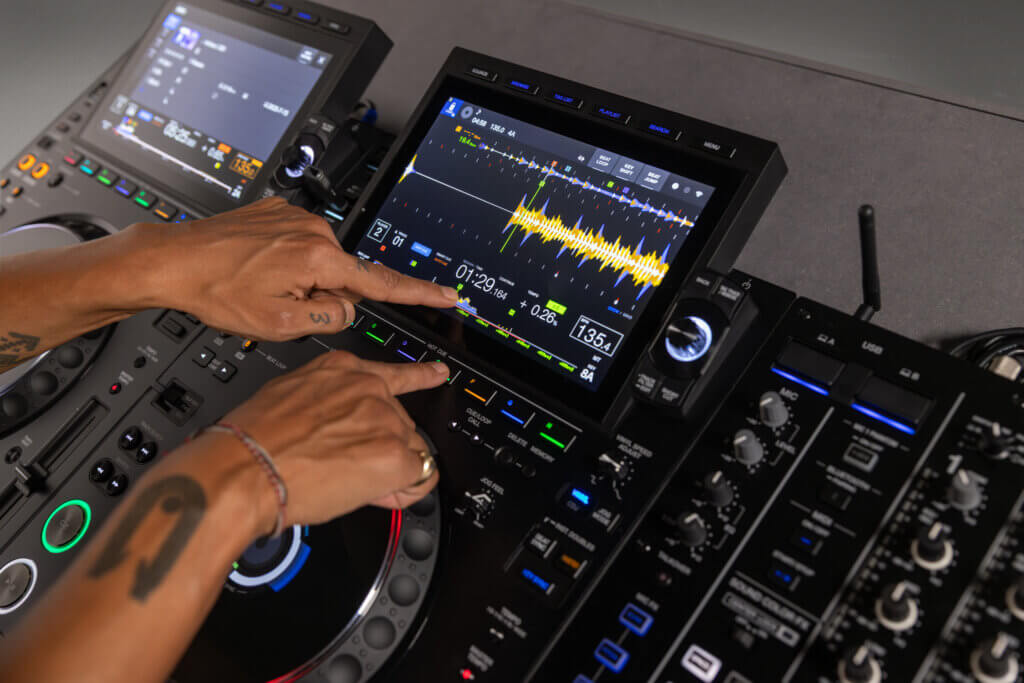
On-device playlist editing reinforces the same point because a prepared running order rarely stays fixed once the floor starts reacting. A player that absorbs those small changes inside the booth keeps the DJ on one working surface instead of scattering attention across multiple devices. That has a direct effect on timing because the artist stays with the interface already under their hands.
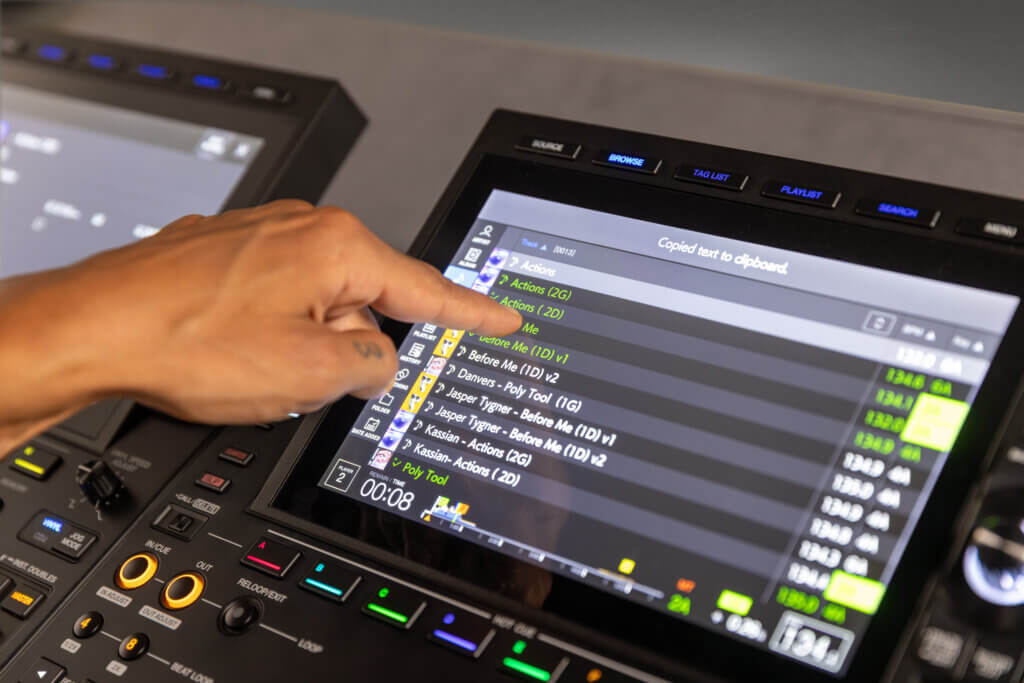
The Global Tag List fits that same logic. Modern libraries often end up split across multiple sources and prep paths, which leaves collections fragmented at the exact moment speed matters most. A unified view pulls that material into one working set. For touring artists and installed rigs alike, this supports faster navigation and steadier confidence when time is tight.
Cueing Is Becoming Muscle Memory
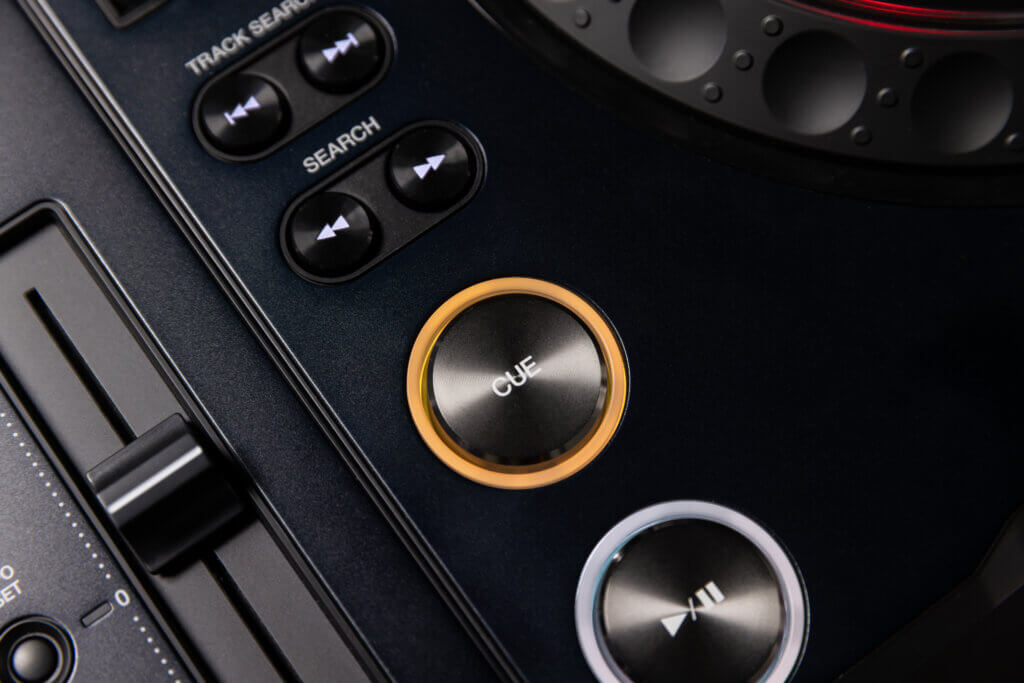
Another quiet change is happening in cue behavior. Cue points once sat closer to navigation than active performance. Many DJs still use them that way, though the category has moved toward something tighter and more physical. Cueing is becoming part of a learned gesture language inside the player itself.
Touch Cue, Smart Cue, and Gate Cue all point in that direction. Touch Cue pulls preview and cue placement into one direct action on the waveform, which shortens the gap between hearing a possible entry point and setting it. Smart Cue supports faster cue replacement, which reflects how cue maps change after tracks are tested on larger systems and transition logic gets refined through repeated use.
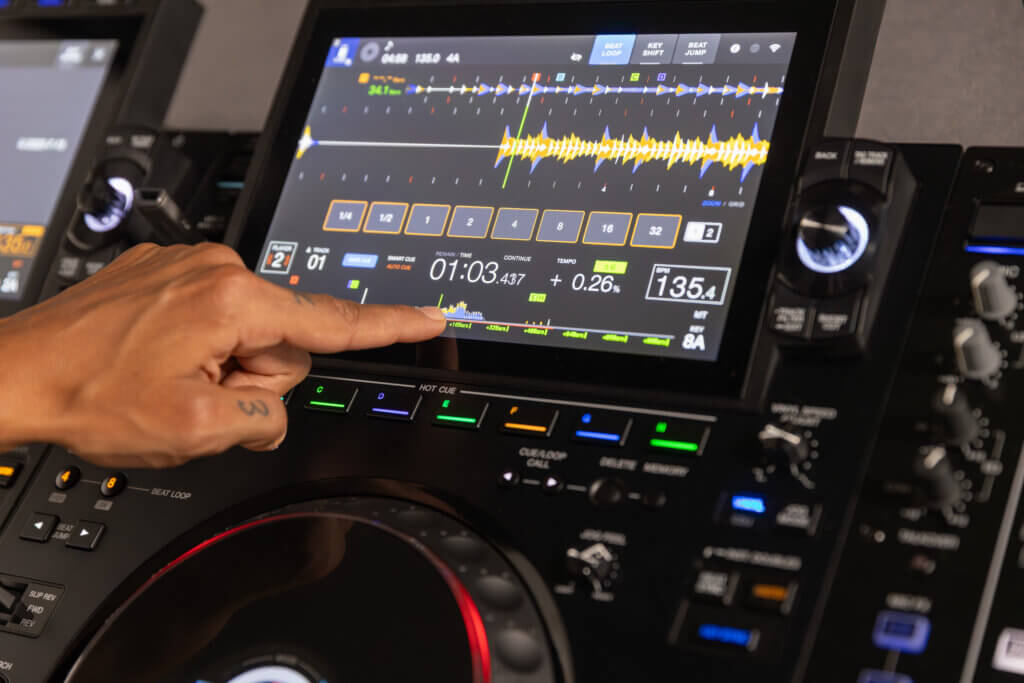
Gate Cue pushes that idea further by turning Hot Cues into momentary triggers through press-and-hold behavior. That opens the door to short repeats, phrase edits, and quick jumps that reward timing practice.
What makes that shift interesting is how it pulls performance language deeper into the deck. The player becomes a place for repeated actions that can be drilled, recalled, and trusted under pressure. That changes the role of the cue button. It stops acting like a bookmark and starts acting like part of the instrument.
The larger point is easy to miss when the discussion stays trapped in feature summaries. The next phase of deck design will likely favor controls that support learned motor behavior without crowding the interface. DJs want speed, trust, and repeatability.
Cue design now sits inside that demand.
The Mixed-The USB vs. Laptop Debate Is Already Old Booth Is Already Here
A lot of discussion around DJ tech still leans on a familiar split between USB and laptop.
That split no longer accurately describes the real booth. A better frame is mixed-source access. Different rooms carry different wiring standards, network conditions, install histories, and workflow expectations. Some artists want removable media as the main path. Some lean on a phone for quick access. Some bring a laptop to handle one part of the process. A setup that can handle those realities cleanly holds an obvious advantage because it asks for less adaptation at the point of performance.
That also explains why local caching after load has practical value. In a shared booth, drives get moved, cables get bumped, and devices get swapped during changeovers. Caching supports playback stability through those disruptions, and stability under imperfect conditions now sits near the center of the category because it affects how much trust the artist can place in the system once the room is moving.
RMX-IGNITE Looks Built For Real Booths
RMX-IGNITE adds another piece to this larger picture because external effects units have long carried a familiar tension. They can expand a set, and they can also introduce routing confusion, inconsistencies, and setup delays. Manufacturers have been trying to reduce that friction for years.
What makes RMX-IGNITE worth attention is that it appears designed to sit closer to the rig instead of floating outside it as a loose accessory. Its 3-band effects architecture lines up with how many DJs already shape transitions across the low, mid, and high ranges. The split between Lever FX for immediate moves and Isolate FX for longer control passes maps cleanly onto common set behavior. Some moments call for a fast action. Some call for a longer hand on the control.
The sampling section extends that same idea.
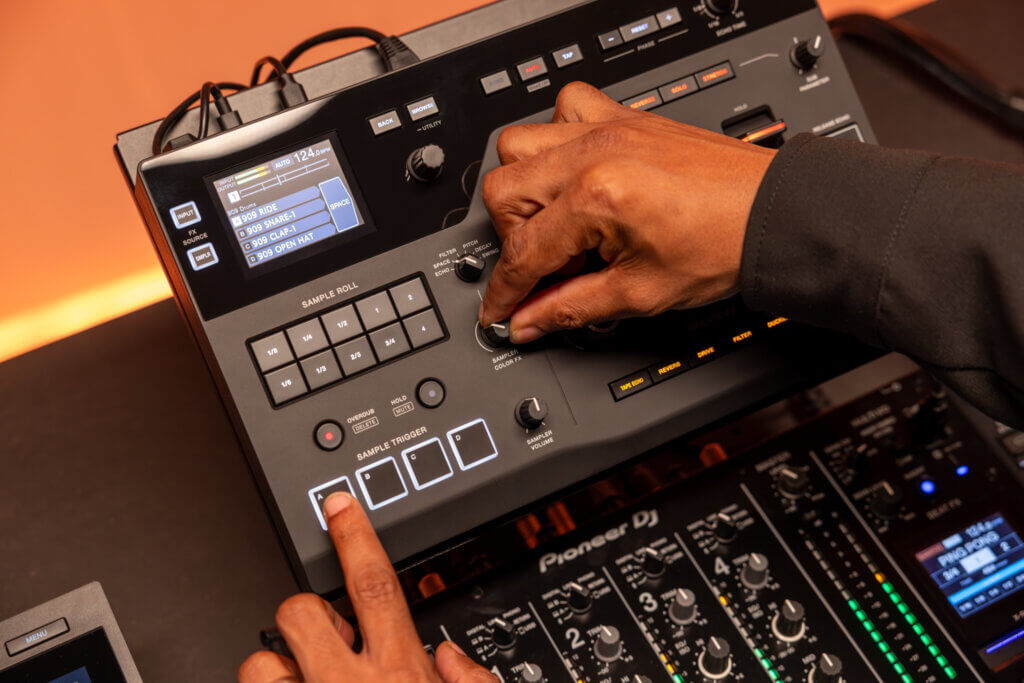
Four trigger pads, Sample Color FX, roll patterns, and support for loading custom material from external storage all point toward a prepared, set-specific approach. The artist can arrive with materials tied to that night’s plan, rather than treating the effects unit as generic decoration. That pushes the workflow closer to rehearsal and repeated practice.
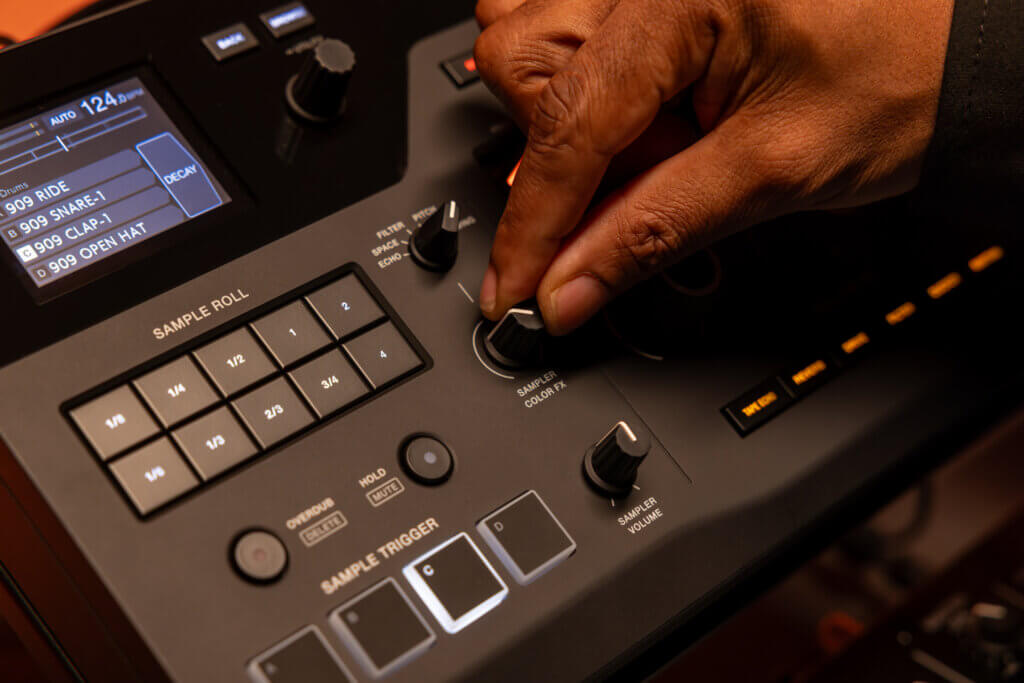
Timing integration strengthens that case further.
In a compatible Pro DJ Link environment, effects timing, rolls, and sampling behavior can line up with deck tempo and grid data across the rig. That supports repeatable performance actions and reduces manual correction during a set. USB-C digital send and return with compatible mixers push in the same direction by supporting better routing and quicker setup in booths built around digital loops.
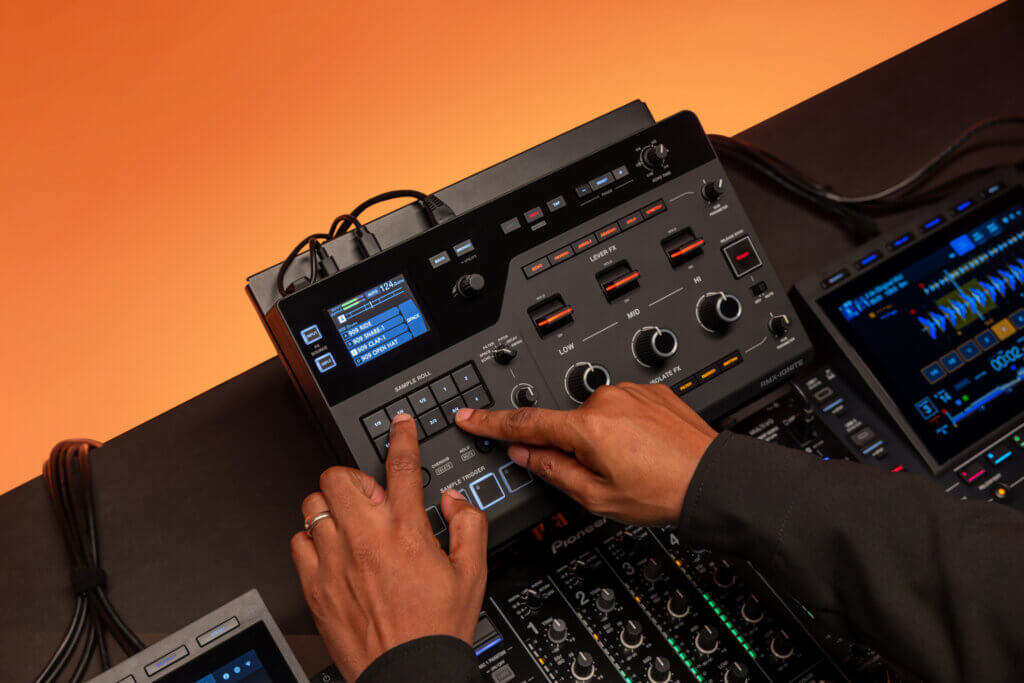
Read together, those choices make AlphaTheta’s effort to pull the external unit into the wider system clear.
This Is A Venue Story Too
One of the more interesting parts of this shift has less to do with artists in isolation and more to do with venue logic. Installed booths must serve operators, technicians, promoters, and a rotating list of performers across the same calendar.
Faster handoffs, better routing, stable timing, and fewer emergency fixes carry direct value in that environment.
Portable identity supports that goal. Continuity supports that goal. Networked timing support and cleaner digital routing support that goal. Once the booth is viewed as managed infrastructure, AlphaTheta’s recent direction starts to look like an attempt to define the next standard for club and festival installs instead of a simple run of hardware launches.
The broader direction is already visible.
DJing’s next chapter will be shaped by portable identity, continuity, and system behavior under pressure. The company that handles that problem best will have a strong claim on the future booth because the gear now includes the continuity of the set from preparation to performance.