
Too Lost Breaks Down What Actually Gets a Demo Noticed at WMC
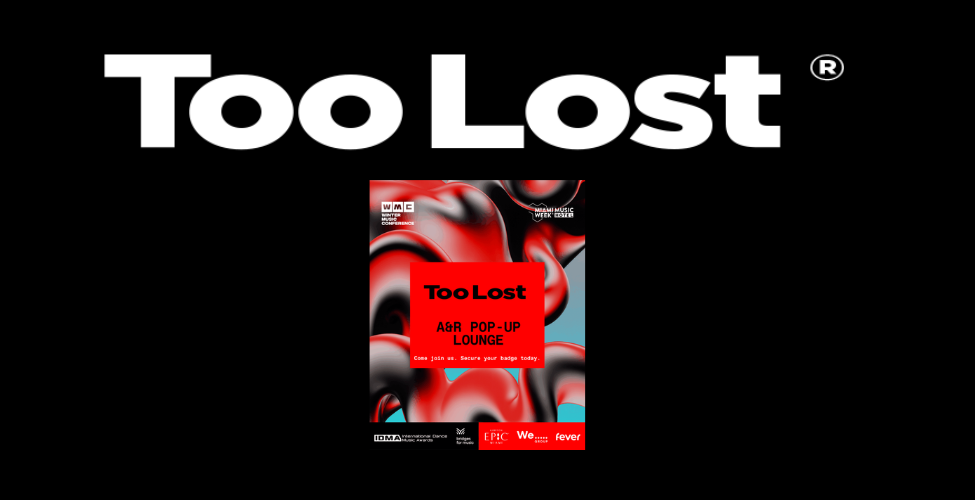
Too Lost enters the A&R Pop-Up Lounge at Winter Music Conference with its wings spread wide. As a music and tech company focused on independent rights holders, it supports more than 400,000 musicians, labels, studios, brands, investors, and partners through a platform built around distribution, publishing, rights management, analytics, royalties, and catalog management.
That scale gives its A&R team a wide-angle view of how artists are developing in real time, and it puts real authority behind any advice they bring into a room full of producers looking for a path forward.
That makes Too Lost a perfect fit for the A&R Pop-Up Lounge, which is one of the additions to WMC 2026 that we are most excited to bring to the table alongside other legacy names like Junior Sanchez and Brobot Records. The format is simple and effective: short, focused conversations, direct USB demo handoffs, and face-to-face access to the people who actually evaluate records, shape rosters, and help move artists into release cycles.
In this conversation with Too Lost A&R Coordinator Carly, whose recent work includes electronic signings and development around artists like AYYBO and MILKBLOOD, alongside Associate Manager of A&R Augie Sommers, whose scope spans electronic, alternative, and hip-hop with artists like Brunello and DJ Smokey, a few themes come through clearly.

Great music still opens the door, but long-term attention tends to go to artists who show consistency in releases, communication, visual identity, and follow-through. The team also points to a bigger shift in how artists need to think about growth now, with less focus on a single placement and more focus on building an ecosystem around the music through cadence, self-owned channels, and a clear sense of direction.
On the demo side, they go over the finer points that often separate a promising track from a signable artist, especially arrangement, tonal detail, and the value of outside feedback before a record reaches the finish line.
Interview With Too Lost’s A&R Team
From the label side of things, what tells you an artist is ready to invest in beyond getting their music on DSPs?
It’s when an artist starts thinking beyond just a single release and begins building a real ecosystem around their music.
That could mean developing a consistent release cadence, building their own imprint, collaborating with other artists in their scene, or creating a visual and cultural identity that ties everything together. Artists ready for the next level usually aren’t just asking, “Who’s going to release this track?” , they’re thinking about how to build momentum across an entire year.
When someone is treating their project like a long-term world instead of a one-off release, that’s when we know they’re ready to invest more seriously.
What is the biggest gap you see between the up-and-coming producers and the established ones outside of the basic skills in the studio? Is it how they communicate, their follow-through, their social media numbers?
Numbers usually result from everything else.
The biggest difference is how clearly artists communicate their world, the visuals, the narrative, and how they present the music to the audience. I also think newer artists sometimes over-focus on getting every release onto a label. In reality, there’s a lot of power in building your own imprint or ecosystem from the ground up. You might have five label releases in a year, but the algorithm moves fast.
To stay consistent, you may need seven more records that live under your own banner with the right distribution partner. The artists who understand that balance tend to move faster.
If a producer at WMC has great music but limited team support, what would you want them to have in place first?
Consistency. Not necessarily perfection, but just consistency in what they’re doing.
Consistency in releases, consistency in content, consistency in showing up.The artists who move forward are usually the ones who just keep putting things out and learning as they go, instead of waiting for the perfect moment or the perfect team to appear. Momentum tends to attract the right people.
What usually needs work first when a demo has clear potential but still falls short?
Often it’s the subtle textures in the record…
the small details that define the color palette of the track. Those elements create the emotional pull that makes people stop and listen. Arrangement plays a big role in that, too.
Sometimes a great idea just needs the right structure to really land on a system. And honestly, a second set of ears can do wonders. Collaborating with new people is one of the fastest ways to unlock a track that’s close but not quite there yet.